GoHighLevel vs Keap: Which Is the Better Choice for Small Businesses?
Ashley — GoHighLevel.ai
24 min read · Updated April 2026
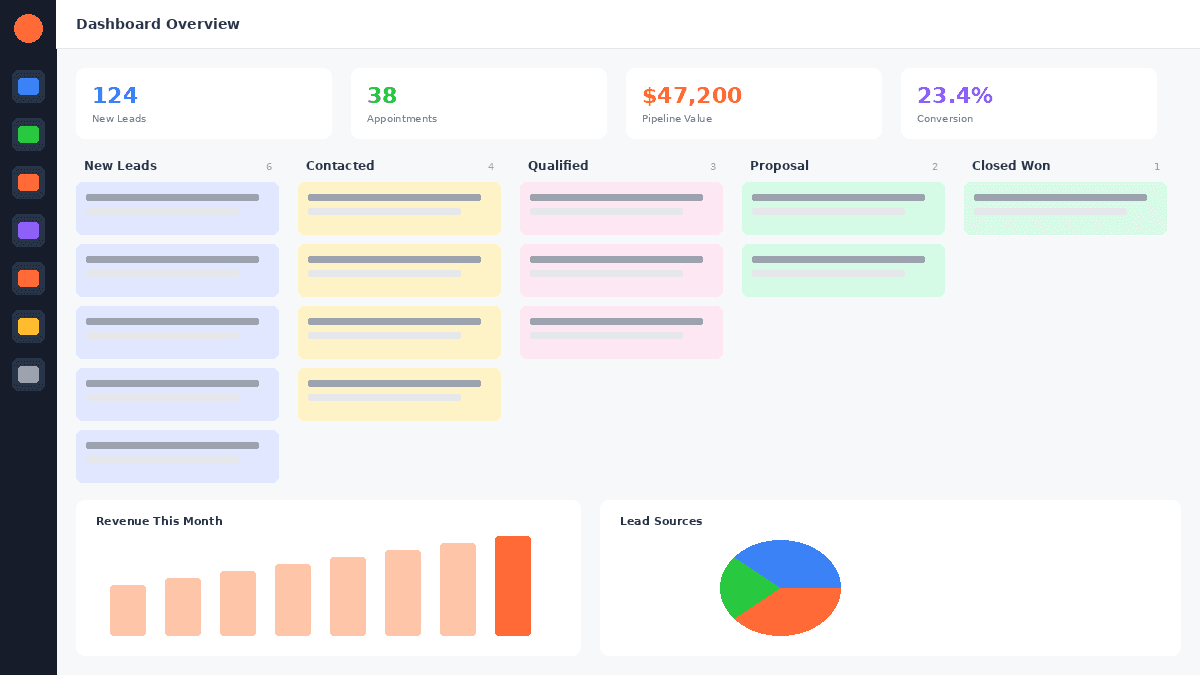
For most small businesses, agencies, and service providers, yes. GoHighLevel costs less than Keap at any meaningful scale, includes native SMS, funnels, and white-labeling that Keap cannot match, and does not charge per contact. Keap remains a reasonable choice for product-based businesses already deeply embedded in its e-commerce infrastructure.
Keap has been through an identity crisis that lasted a decade. What started as Infusionsoft in 2001 rebranded to Keap in 2019, split its product line into confusing tiers, then spent years trying to convince its own customers what had changed and why. Meanwhile, GoHighLevel quietly became the platform that Infusionsoft-era users wished had existed all along: a single tool that handles CRM, email, SMS, funnels, booking, and automation without requiring a consultant to configure it.
This is a full, honest comparison. You will find out exactly how these two platforms stack up on price, automation, features, and the total costs that do not show up in the monthly subscription line.
EXTENDED FREE TRIAL
Start with 30 days free, not 14.
This link gives you an extra 16 days compared to going directly to GoHighLevel.
Claim your 30-day trial hereThe Keap Rebrand: What Actually Changed (And What Didn't)
You cannot compare these platforms without addressing the elephant in the room. Infusionsoft was renamed Keap in 2019 and the rebrand created more confusion than clarity.
Here is what actually happened. Infusionsoft had a reputation problem. The platform was notoriously complex, expensive, and required significant onboarding investment. Small businesses often paid consultants thousands of dollars just to get their automation running. Infusionsoft held a "Certified Partner" program specifically because the software was too difficult for most users to implement on their own. The platform was powerful, no question, but power without accessibility is a liability when you are trying to grow a small business.
The 2019 rebrand introduced "Keap" as the simplified, entry-level product and kept "Infusionsoft by Keap" for the legacy enterprise product. That became "Keap Max Classic" later, which still runs the original Infusionsoft engine under the hood. The simpler "Keap" brand covered two new tiers, Keap Grow and Keap Pro, that offered a less complex interface with fewer features.
The core problem the rebrand was trying to solve: Infusionsoft's brand carried too much baggage. Marketers who had never used it had heard the horror stories about complexity and cost. The new name was supposed to signal a fresh start. But the underlying product decisions were harder to change than the logo.
As of 2026, Keap's lineup looks like this:
- Keap Pro: $199/month for 1,500 contacts and 2 users, includes CRM, email, basic automation, appointments, and invoicing
- Keap Max: $289/month for 2,500 contacts and 3 users, adds marketing analytics, lead scoring, and company records
- Keap Max Classic: $449/month for 2,500 contacts and 3 users, the original Infusionsoft engine with full campaign builder, e-commerce, and order management
Every tier adds cost per additional contact block and per additional user. At 10,000 contacts on Keap Max, you are paying closer to $450/month before user seats. The rebrand did not solve Infusionsoft's core pricing problems. Keap still charges more as your business grows.
Info
Keap's pricing structure rewards small lists and punishes growth. Every contact block you add increases your monthly bill, which means the platform gets more expensive precisely when your marketing is working.
The rebrand did not solve Infusionsoft's complexity problems either. Keap Max Classic still runs the legacy campaign builder that requires a significant learning investment. The newer Keap tiers are simpler but significantly less powerful than what Infusionsoft users were accustomed to. You end up choosing between "complex but capable" and "simple but limited" depending on which tier you pick.
Pricing: The Real Numbers
Let's run the actual math across different business sizes, because this is where the comparison gets decisive. Most pricing pages show the base plan price. The real cost emerges when you factor in contact overages, user seats, and the tools you still need to buy separately.
Solo operator or consultant (1 person, 2,000 contacts): Keap Pro at $199/month. GoHighLevel Starter at $97/month. GHL is $102/month cheaper and includes native SMS, funnels, a website builder, review management, and unlimited contacts. Over a year, that is $1,224 saved before accounting for any complementary tools you would need to add to make Keap equivalent.
5-person team (5 users, 5,000 contacts): Keap Max at $289/month for 3 users, then you are adding user seats at $29/seat for the other 2. That is $347/month for the platform itself. Contact overage for 5,000 contacts on that plan adds roughly $60/month. You are at approximately $407/month before adding any SMS tool or funnel builder.
GoHighLevel Unlimited at $297/month. Unlimited users, unlimited contacts, unlimited sub-accounts, SMS included. The math is not close.
10-client agency: Keap has no concept of multi-client account management. Each client would need their own Keap subscription. Even at the lowest tier, 10 clients costs $1,990/month for the platform alone, and you still do not have a centralized dashboard or any way to manage campaigns across accounts efficiently.
GoHighLevel Unlimited at $297/month manages all 10 clients as sub-accounts from one interface. The cost difference compounds further if you white-label GHL and bill clients for the platform. Some agencies recoup their entire GHL subscription cost from two or three clients paying for white-labeled access.
50-client agency: Keap simply is not viable as an agency tool at this scale. The architecture was not designed for it, and no practical workaround exists.
GoHighLevel SaaS Pro at $497/month, with the ability to resell the platform to all 50 clients and generate SaaS revenue that can exceed your subscription cost many times over. The economics flip entirely.
Info
GoHighLevel's pricing structure is built for agencies. Keap's was built for small businesses managing their own marketing. Neither platform is wrong about its design priorities, but they serve fundamentally different operators.
Feature Comparison: Deep Dive
CRM: Three Levels Deep
Surface level: Both platforms track contacts, assign tags, and manage deal pipelines. Both work for basic contact management.
Mid-level: GoHighLevel's CRM uses smart lists, which are dynamic contact segments that update automatically based on behavior and field values. You can filter contacts by last activity, pipeline stage, custom field, tag, or any combination and save those views for repeated use. Keap Max Classic has solid segmentation through its tag system and has long been praised for tagging flexibility among power users. Keap Pro's segmentation is more limited and works best for simpler databases.
Deep level: GoHighLevel's CRM integrates directly with every communication channel. A conversation from any channel, whether SMS, email, call, Facebook message, or Google Business Message, appears in the contact record and contributes to the full contact history. Pipeline movement can trigger automations across all those channels. Keap's CRM is more tightly coupled to email. SMS and calls require additional configuration through third-party integrations, typically Twilio, and do not feed as cleanly into a unified contact view.
Automation: Three Levels Deep
Surface level: Both platforms offer visual automation builders with triggers, conditions, and actions. Both can send emails automatically based on contact behavior.
Mid-level: GoHighLevel's workflow builder fires across every channel it supports natively. A single trigger from a form submission can branch into an SMS sequence, an email drip, a task assignment for a team member, an opportunity created in the pipeline, and a review request after a service appointment, all within one workflow. Keap Max Classic's campaign builder is powerful but primarily email-centric. Its goal-based routing system allows non-linear paths that are genuinely sophisticated for complex nurture sequences, but many users find them difficult to maintain without help.
Deep level: GoHighLevel processes webhooks natively, allowing real-time integration with external tools and custom triggers. Keap has API access on all plans but requires more developer work for complex custom integrations. For marketers who are not also developers, GoHighLevel's native channel depth removes a layer of technical complexity that many Keap users historically outsourced to certified partners at significant cost.
See our automation workflows guide for examples of what you can build inside GHL's workflow builder.
E-Commerce: Where Keap Holds Ground
This is the one area where Keap Max Classic still has a legitimate edge for the right user. Infusionsoft was built with e-commerce at its core. Order forms, product catalogs, subscription management, affiliate commissions, and complex discount rules were all part of the original system design, and decades of iteration have made it mature.
GoHighLevel has expanded its commerce tools significantly and now supports products, order forms, one-click upsells, payment plans, and subscriptions. For service businesses and digital product sellers, GHL's commerce tools are more than sufficient. For businesses with large physical product catalogs, complex subscription billing with many pricing variations, or established Infusionsoft e-commerce workflows that took years to build, the migration math gets harder to justify on cost savings alone.
Email and Deliverability
Keap's email infrastructure has been in place for over two decades and has a strong reputation for deliverability. The platform does most of the technical configuration for you, which is a real advantage for users who do not want to manage SPF, DKIM, and DMARC records.
GoHighLevel's email deliverability is solid but requires more hands-on configuration to perform at its best. Setting up your sending domain, warming up your sending IP, and monitoring bounce rates are tasks you will need to stay on top of. For marketers comfortable with email infrastructure, this is manageable. For business owners who want it to just work, there is a small advantage to Keap's setup experience.
FREE TRIAL
Get 30 Days Free — not the standard 14.
- ✓All features included
- ✓No credit card required
- ✓Cancel any time
Join 60,000+ agencies already using GoHighLevel
Get 30 Days FreeGoHighLevel Pros and Cons
Who Is the Typical Keap Refugee?
After watching years of migrations from Keap to GoHighLevel, a recognizable pattern emerges. The person leaving Keap usually fits one of these profiles, and understanding them helps clarify who GHL is actually built for.
The trapped Infusionsoft veteran. They have been using the platform since it was called Infusionsoft. They have years of tags, campaigns, and contact history locked inside it. They know the platform is overkill for their current needs but have been afraid to migrate because the original setup cost was enormous and painful. When they finally see what GHL costs per month compared to their Keap Max Classic subscription, and realize how many tools GHL replaces, the financial case becomes impossible to ignore.
The agency owner who tried to force Keap into a multi-client context. They set up separate Keap accounts for each client, struggled to manage multiple logins, could not replicate campaigns across accounts cleanly, and spent more time administering the tool than actually using it. GoHighLevel's sub-account model solves this problem completely and at a fraction of the per-client cost.
The service business owner priced out by contact growth. They started on a small Keap plan, grew their list through effective marketing, and watched their monthly bill climb without any change to what the software was doing for them. GHL's flat pricing feels like a structural advantage, not just a promotional deal.
The marketer who needed SMS but found Keap's integration painful. Keap's SMS runs through a third-party Twilio integration. It works, but it requires configuration, costs extra, does not feel native, and creates a fragmented conversation history. When competitors are running SMS follow-ups and review requests from a unified inbox, fighting with an integration every time something breaks feels like a real competitive disadvantage.
The person who hired a consultant just to build their Keap campaign sequences. They paid someone $2,000 to $5,000 to configure Infusionsoft's campaign builder. The consultant left, the campaigns needed updating, and they could not touch the sequences themselves without risking breaking something. The idea of an automation builder they can manage, update, and expand independently is worth as much as the cost difference in their eyes.
What GoHighLevel Does NOT Do That Keap Did
Honesty matters here. GoHighLevel is not a perfect replacement for every Keap use case, and pretending otherwise would be a disservice.
Complex e-commerce order management. Keap Max Classic's order and subscription system was built for businesses selling physical and digital products at scale: multiple pricing tiers, trial periods, complex discount structures, and affiliate tracking at the order level. GoHighLevel's commerce features are improving but are not at Keap Max Classic's level for operations that depend on sophisticated catalog and subscription management.
Goal-based campaign routing. Infusionsoft's campaign builder uses a visual canvas where you place "goal" objects that contacts hit when they complete specific behaviors. This allows non-linear automation paths that are genuinely powerful for complex nurture sequences. GHL's workflow builder is linear by default. You can approximate goal-based behavior with nested workflows and conditional triggers, but it requires a different mental model and more workflows to achieve the same result.
Deep email behavioral analytics. Keap Max Classic offers granular reporting on email performance at the campaign level, including click heat maps and behavioral scoring that tracks engagement history over time. GoHighLevel's email reporting covers the fundamentals clearly but is less detailed for marketing teams whose strategies depend on long-term email behavioral analytics.
Legacy Infusionsoft integrations. Many businesses built custom integrations against the Infusionsoft API over years of operation. Migrating away from Keap means rebuilding those integrations against GHL's API or replacing them with GHL's native tools. Depending on what is connected and how complex those integrations are, this can be a significant project.
Migrating from Keap to GoHighLevel: Step by Step
Info
Do not cancel Keap until you have confirmed three things: all active email sequences have been rebuilt and tested in GHL, all active subscriptions and recurring payments have been migrated without billing gaps, and you have exported every contact record and historical file you may need for compliance or reporting purposes. Once you cancel, access to your Keap data ends.
Migration Challenges Worth Planning For
Tag mapping takes longer than expected. Keap users often accumulate hundreds of tags over years of use. Before importing to GHL, audit your full tag list, remove tags attached to obsolete campaigns, and consolidate overlapping tags where possible. Bringing over hundreds of legacy tags without cleanup creates a messy CRM from day one and makes future segmentation harder.
Campaign builder logic does not translate directly. Keap Max Classic's goal-based campaign canvas and GHL's linear workflow builder use different mental models. Complex Infusionsoft campaigns, particularly those with multiple goal-based branches and non-linear paths, may need to be broken into several GHL workflows, each triggered by different conditions. Budget extra time to rethink your automation architecture rather than trying to copy it one-for-one.
Contact engagement history does not transfer. All behavioral tracking from Keap (email opens, link clicks, page visits, lead score changes) stays in Keap. GHL starts fresh with a clean slate. If your segmentation and scoring depends heavily on historical engagement data, plan how to handle that gap proactively. One practical approach is to create a "legacy contact" tag for everyone imported, then build specific re-engagement workflows for that segment rather than treating them like new leads.
Existing third-party integrations need re-evaluation. If you are connected to other tools through Keap's integrations or custom API work, check whether GHL connects natively or via Zapier and Make before you migrate. Many common tools (Stripe, QuickBooks, Shopify, scheduling apps) have GHL native connections, which may actually let you simplify your overall stack as part of the migration process.
Real Cost Analysis: 3-Year View
The best way to evaluate this choice is total cost of ownership over time, not just the monthly subscription line. Here is how the numbers work out across different business types.
Solo service business (1 user, 3,000 contacts):
Keap Pro: $199/month, plus contact overage for the 1,500 contacts above the included limit at approximately $30/month, plus a Twilio-based SMS tool at approximately $25/month minimum. Total: around $254/month without a funnel or website builder.
GoHighLevel Starter: $97/month. SMS included. Funnel builder included. Website builder included. No overages.
Monthly savings with GHL: $157 or more. Three-year savings: $5,652 or more.
Growing team (5 users, 8,000 contacts):
Keap Max: $289/month base, plus $58/month for two additional user seats, plus approximately $120/month for contacts above the 2,500 included limit, plus approximately $60/month for SMS integration. Total: roughly $527/month.
GoHighLevel Unlimited: $297/month. Unlimited users, unlimited contacts, SMS included.
Monthly savings with GHL: $230 or more. Three-year savings: $8,280 or more.
Agency managing 10 client accounts:
Keap cannot serve this use case through one account. At Keap Pro pricing, 10 separate client accounts cost $1,990/month at minimum and still do not give you centralized management.
GoHighLevel Unlimited: $297/month manages all 10 clients as sub-accounts. If you resell GHL access to clients at $97/month each, that is $970/month in potential revenue. Your net platform cost becomes negative.
Agency at 50-client scale:
Keap Max Classic for 50 clients would approach $22,500/month and still offer no centralized management.
GoHighLevel SaaS Pro: $497/month for the platform. White-labeled and resold to 50 clients at even $50/month each generates $2,500/month in revenue against a $497 cost. The platform pays for itself and generates margin.
Who Should Choose GoHighLevel
GoHighLevel is the right choice for service businesses, consultants, coaches, and agencies looking for one platform to handle all client-facing operations. If you need SMS, multi-channel automation, booking, funnels, and reputation management without paying separately for each tool, GHL delivers significantly more value per dollar than Keap at virtually any scale above a handful of contacts.
If you are managing multiple clients or want to white-label a marketing platform and resell it, GHL was designed for exactly that. Keap was not.
If you are currently on Keap Pro or Keap Max and feeling constrained by what the platform can do or irritated by watching your bill grow with your list, GHL's Starter plan at $97/month likely covers everything you are using now plus more, for less than half the price.
If you have been holding onto Keap Max Classic because you built your business on the Infusionsoft campaign builder and switching felt like too much disruption, the migration effort is real but the ongoing cost savings are significant enough to make a compelling case for doing the work.
Who Should Stay with Keap
If your business runs significant e-commerce operations on Keap Max Classic and you have complex product catalogs, multi-tier subscription billing, and affiliate tracking built deeply into your order management workflows, the migration cost may outweigh the monthly savings in the short term. Infusionsoft's order management capabilities are genuinely mature, and if that infrastructure is the foundation of your revenue, a careful project-level cost-benefit analysis is warranted before committing to a switch.
If you have a large team deeply trained on Keap's campaign builder and your automations are generating strong, consistent ROI, the productivity disruption of migration may not pay off immediately even if the long-term economics favor GHL.
Final Verdict
Keap spent years trying to become simpler without becoming more affordable, and the result is a product that still costs more than GoHighLevel while doing less for most of the people who buy it. For the vast majority of small businesses, service providers, and agencies comparing these platforms in 2026, GoHighLevel wins on price, on feature breadth, on multi-channel capability, and on scalability.
The only meaningful category where Keap maintains a genuine advantage is legacy e-commerce functionality for businesses that have built deeply on Infusionsoft's order management system. Outside of that specific use case, the numbers and feature list point clearly in one direction.
Start your 30-day free trial of GoHighLevel and see how it compares to what you are paying for Keap today.
Try GoHighLevel free for 30 days here.
GoHighLevel.ai Editorial Team
Independent GHL experts helping agencies and SaaS builders.
Was this article helpful?